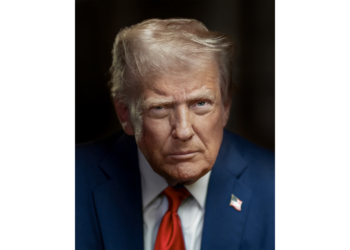



The Trump AI ban is real news, but it is not what viral posts suggest. President Donald Trump said on Tuesday, October 27, 2026, that he will ban the term artificial intelligence in government documents and “everything else,” and he wants “Super Intelligence” used in its place. The technology itself is not being outlawed. Here is the full report on the announcement.
What Trump Said in the Truth Social Post
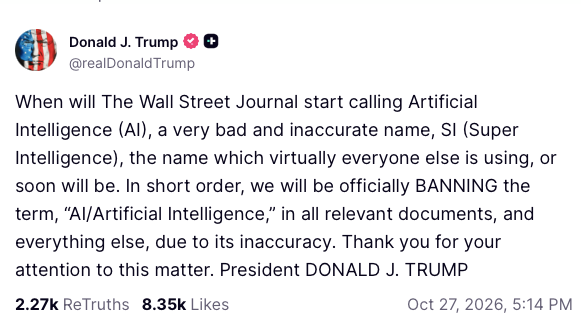
Trump asked when a major business newspaper would stop using what he called a very bad and inaccurate name and switch to SI, short for Super Intelligence. He promised that officials would soon move to officially ban the term in all relevant documents, citing its inaccuracy. He also claimed that almost everyone else already uses his preferred name, or soon will.
The Trump AI Ban Targets a Name, Not the Technology
Nothing in the post restricts chatbots, AI tools, or the companies that build them. The Trump AI ban, as announced, goes after vocabulary only. Trump argued that the word artificial makes the technology sound fake. Apps, models, and research can continue exactly as before.
How the Super Intelligence Rename Campaign Began
The push did not start this week. Trump began promoting the phrase in a Truth Social poll last month, then claimed Chinese leader Xi Jinping liked it too. He ran three polls offering Super Intelligence, Extreme Intelligence, and Supreme Intelligence as alternatives.
The campaign then moved into government. Trump signed an executive order last month directing the executive branch to say SI instead of AI, and a separate analysis of the rename push notes it has done little to change how Americans talk about the technology. In early October, Trump declared that the White House considers anyone using the old term to be the enemy. He also announced a Super Intelligence Force, led by Director of National Intelligence Jay Clayton, to coordinate federal efforts.
Free Speech Questions Around the Trump AI Ban
Critics quickly raised the First Amendment. When the White House press office was asked how the government could ban a term given constitutional free speech protections, it answered only with the words “refer to the TRUTH,” according to this detailed breakdown of the reaction. A rule covering federal paperwork is easy to imagine. A ban reaching private speech would raise serious constitutional problems.
Media and the Public Have Not Followed
The term AI goes back decades, and the Trump White House itself used it last year when releasing an AI Action Plan. Polling also shows significant public concern about AI and negative views of data centers, so a name change is unlikely to shift opinion on its own.
Did Trump Really Announce a Complete AI Ban?
No. A viral screenshot claimed Trump announced a complete and total ban on artificial intelligence, but fact checkers found he never made that post. The real Trump AI ban only concerns the name of the technology.
What Happens Next
Trump said the ban would come “in short order,” but no formal order has been published yet. Watch for new executive action or agency guidance that spells out where the term is prohibited. Until then, the Trump AI ban remains a promise, and AI will keep its name in newsrooms, labs, and everyday conversation.






1 Comment