




Taylor series memes are the funniest way to survive calculus, and this list of 20 of the best ones proves it. From engineers insisting that sin(x) = x to the Maclaurin series sulking at the bottom of a pool, these jokes turn a scary infinite sum into something you can actually remember.
Whether you are a student cramming for an exam, an engineer who approximates everything, or someone who just clicked because of the pop star pun, scroll down. After the 20 memes, we explain what a Taylor series is, where it is used, how it began, and how it differs from a Maclaurin series.
1. Sin(x) = x Meme: Why Engineers Say Yes
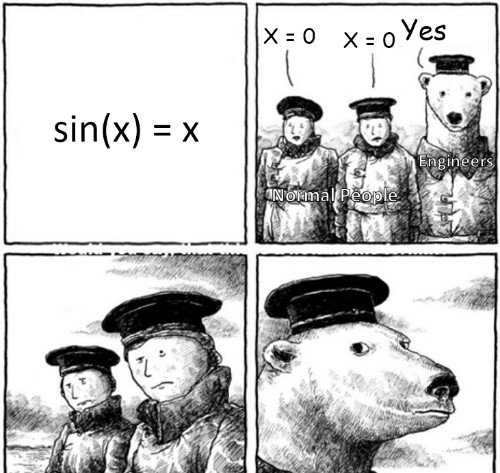
Two sailors say the only solution to sin(x) = x is x = 0, while the polar bear labeled engineers calmly says yes. The joke hides real math: the first term of the Taylor series of sine is just x, so for tiny angles engineers happily swap sin(x) for x. It works near zero and falls apart quickly as x grows, which is exactly the lesson of every Taylor series.
2. Physicists Use Taylor Expansion on Everything Meme
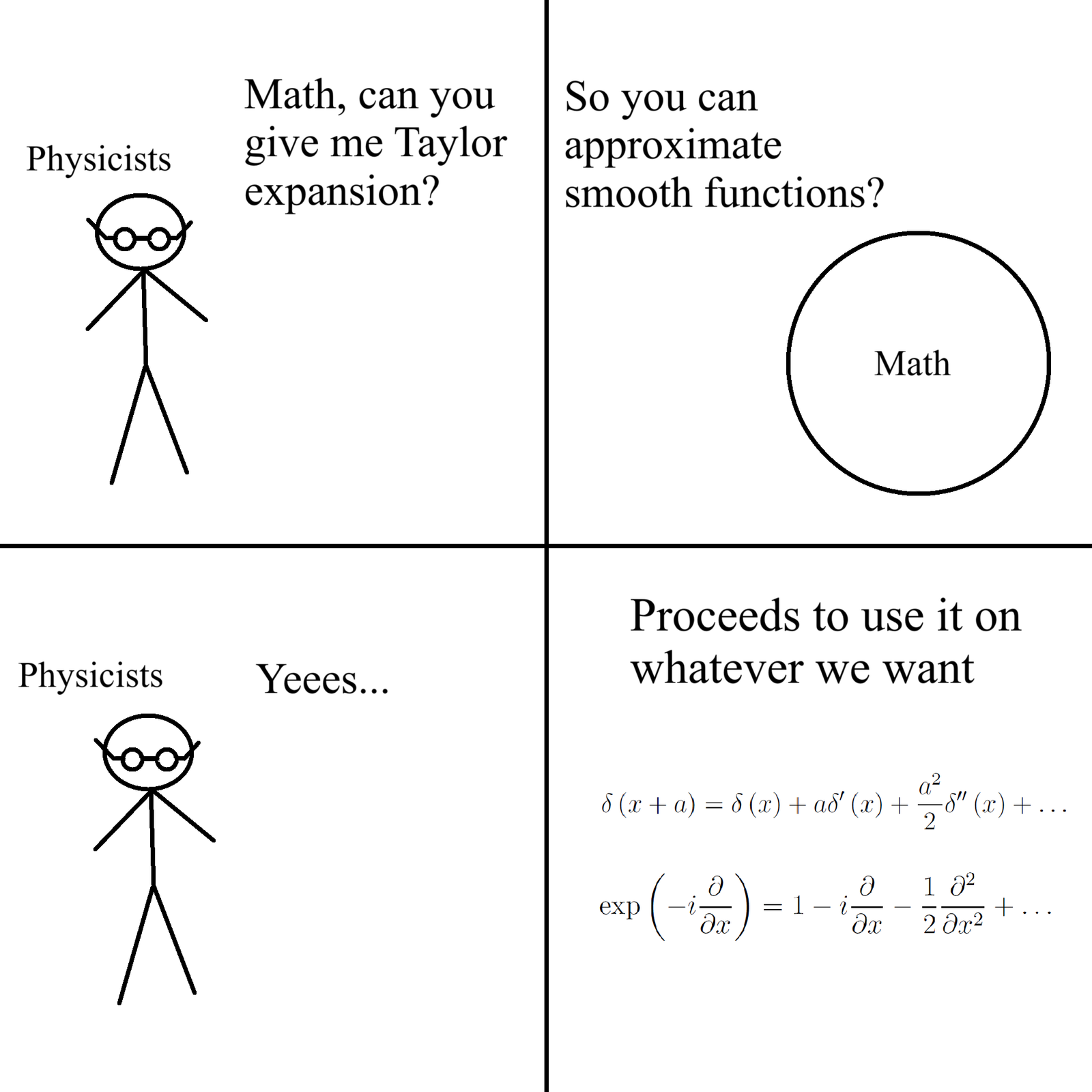
A stick-figure physicist asks math for a Taylor expansion, math politely offers it for smooth functions, and the physicist then applies it to delta functions and differential operators without blinking. Anyone who has survived quantum mechanics knows the shift operator exp(a d/dx) is literally a Taylor series in disguise. Physicists treat it less like a theorem and more like a universal tool.
3. Spider-Man Glasses Meme: Sine as a Ratio vs Sine as a Series
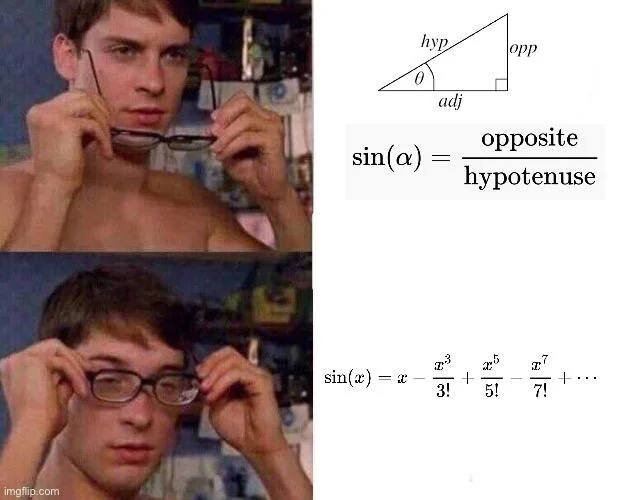
In the top panel, sine is the friendly school ratio of opposite over hypotenuse. Put on the glasses and sine becomes x − x³/3! + x⁵/5! − x⁷/7! and so on, an infinite polynomial. It captures the moment every calculus student realizes sine never needed a triangle at all.
4. “A Good Taylor Series Can Change Your Life” Meme
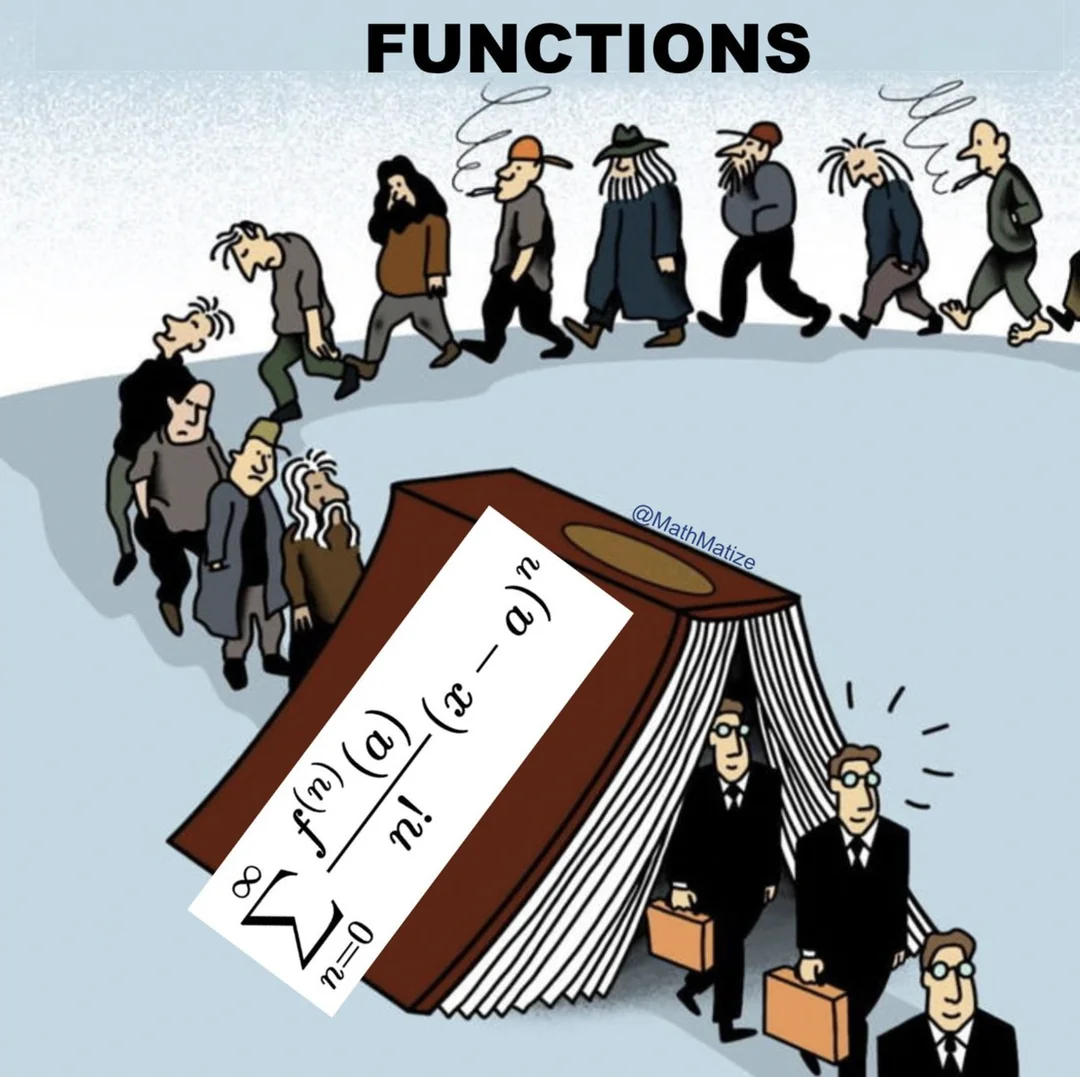
A ragged crowd of functions shuffles toward a giant book stamped with the Taylor series formula and walks out the other side as tidy, briefcase-carrying polynomials. It is a glow-up meme for math: wild functions go in, well-behaved approximations come out. Honest and accurate, as long as you stay inside the radius of convergence.
5. Taylor Series vs Maclaurin Series Meme: The Sleek Version vs the Lumpy One

The Taylor series gets the sleek cartoon hero, and the Maclaurin series gets the squished, off-brand copy. It is unfair, because a Maclaurin series is simply a Taylor series centered at zero. Same family, same face, just a little more compact.
6. “No Need to Thank Me” Maclaurin Series Meme
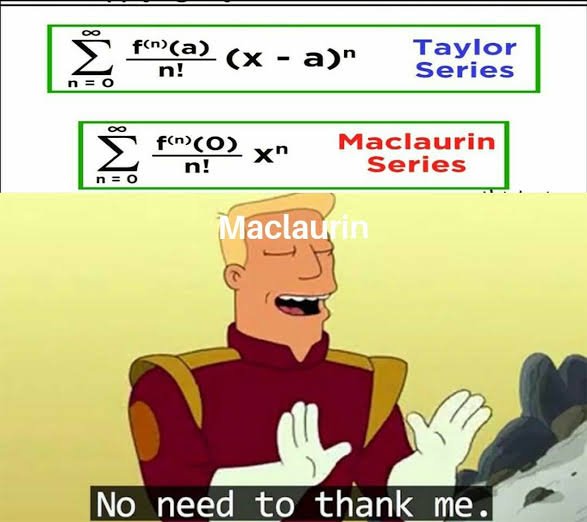
The Taylor formula sits above the Maclaurin formula, and the cartoon captain labeled Maclaurin takes a bow. His gift to humanity is deleting the “a” so you never have to write (x − a)ⁿ again. A small simplification that saved millions of students a lot of ink.
7. Drowning Meme: Taylor Series Gets the Love, Maclaurin Gets Forgotten

The Taylor series sits safely on the lifeguard’s hands while the Maclaurin series rests at the bottom of the pool as a skeleton. The meme exaggerates a real habit: most people learn the general Taylor series and then meet Maclaurin only as an afterthought. Poor Colin deserves better.
8. Where Is My Series? The Convergence Heartbreak Meme
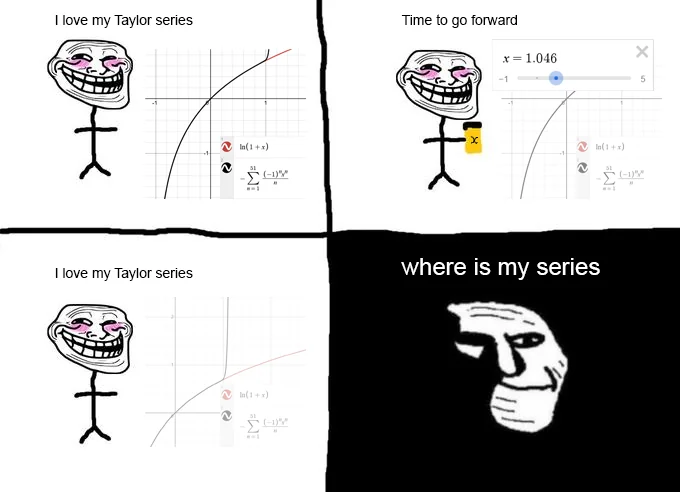
The troll face loves its Taylor series of ln(1+x) until the slider on the graph pushes x to about 1.046 and the approximation vanishes. That is the radius of convergence in action: this series only works for x between −1 and 1. Step one inch past the boundary and your beautiful curve is gone.
9. Tangent Series Meme: When the Pattern Breaks
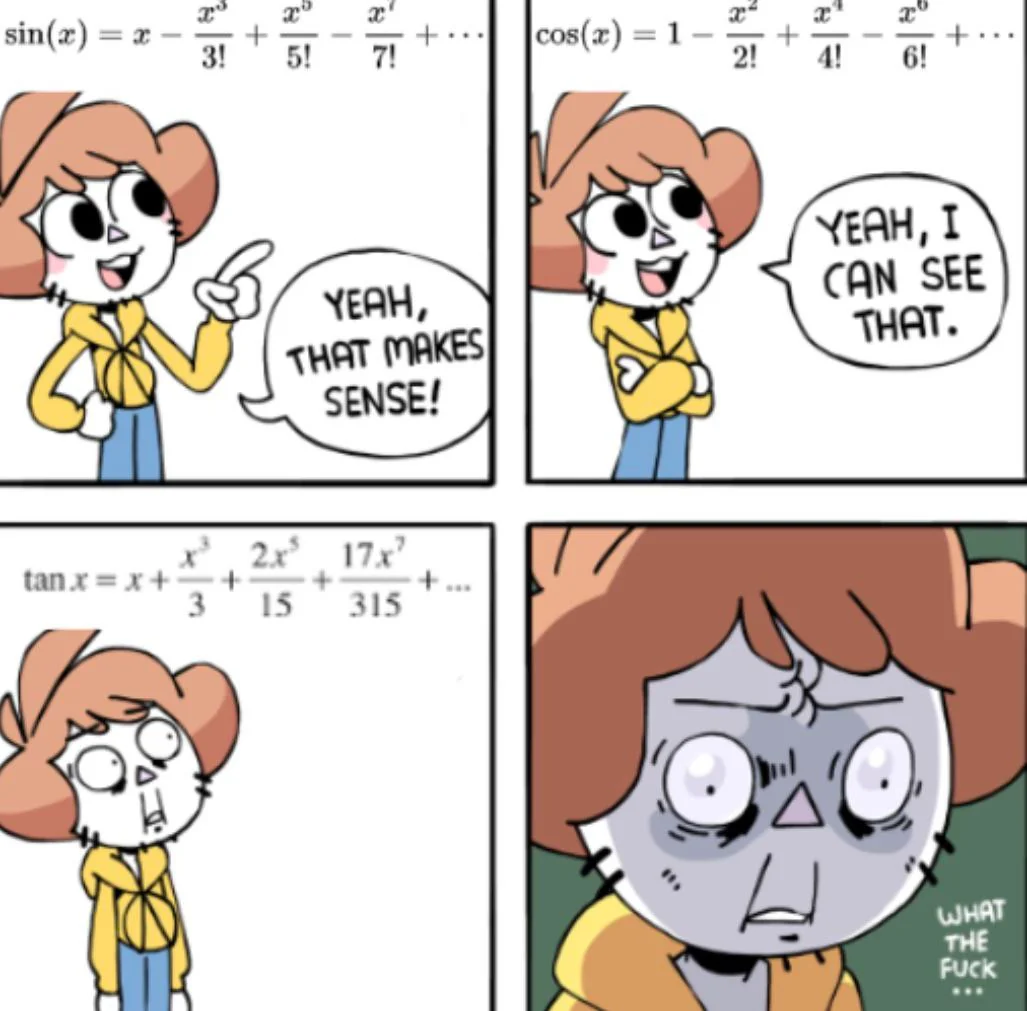
Sine and cosine look lovely, with clean alternating signs and simple factorials. Then tan x shows up with coefficients like 2/15 and 17/315, and the cartoon’s face says everything. Tangent really is the weird sibling, and its series only converges for |x| < π/2.
10. Everything’s a Polynomial: The IQ Bell Curve Meme
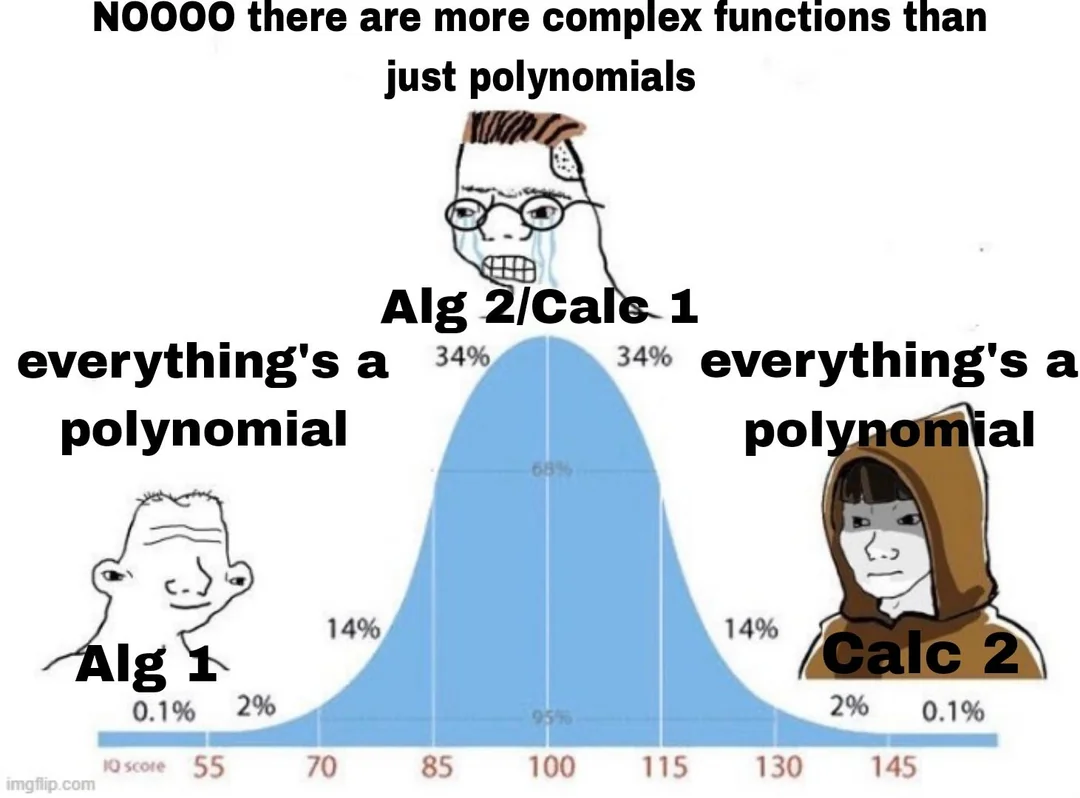
At both ends of the bell curve, Alg 1 and Calc 2 students agree that everything is a polynomial. Stuck in the middle, the Alg 2 and Calc 1 student cries that there are more complex functions than polynomials. The twist is that Taylor series proves the Calc 2 crowd partly right: many functions behave like infinite polynomials.
11. “Taylor’s Version” Cheat Sheet Meme
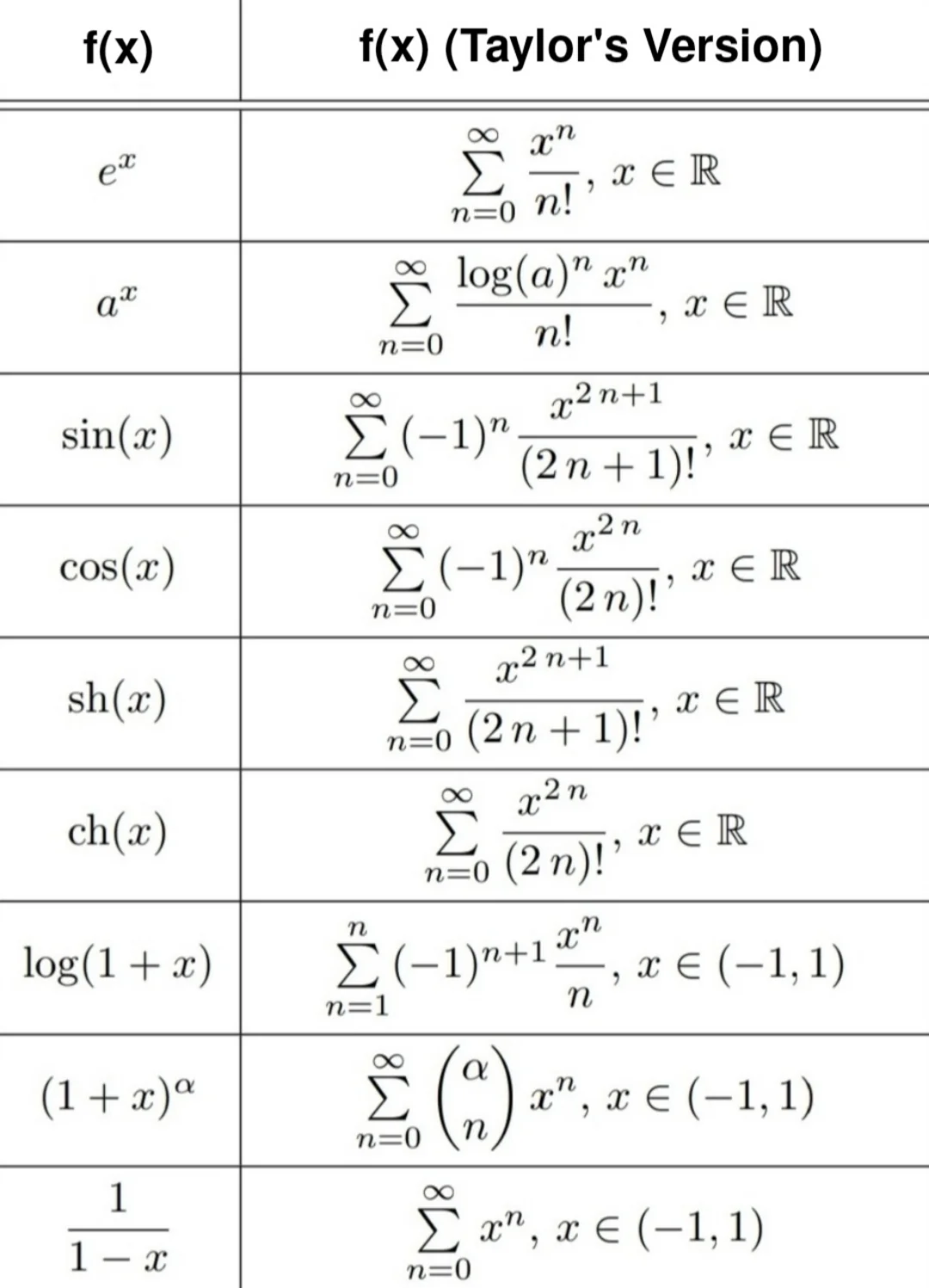
This one is a pun and a study aid in one: a table titled Taylor’s Version lists the standard series for eˣ, aˣ, sine, cosine, hyperbolic sine and cosine, log(1+x), (1+x)^α and 1/(1−x). It also shows each series’ domain, so you can see at a glance that eˣ, sine and cosine work everywhere while log(1+x) and 1/(1−x) only work on (−1, 1). Screenshot it before your next exam.
12. “I Love Taylor” “Me Too” Meme: Two Very Different Crushes
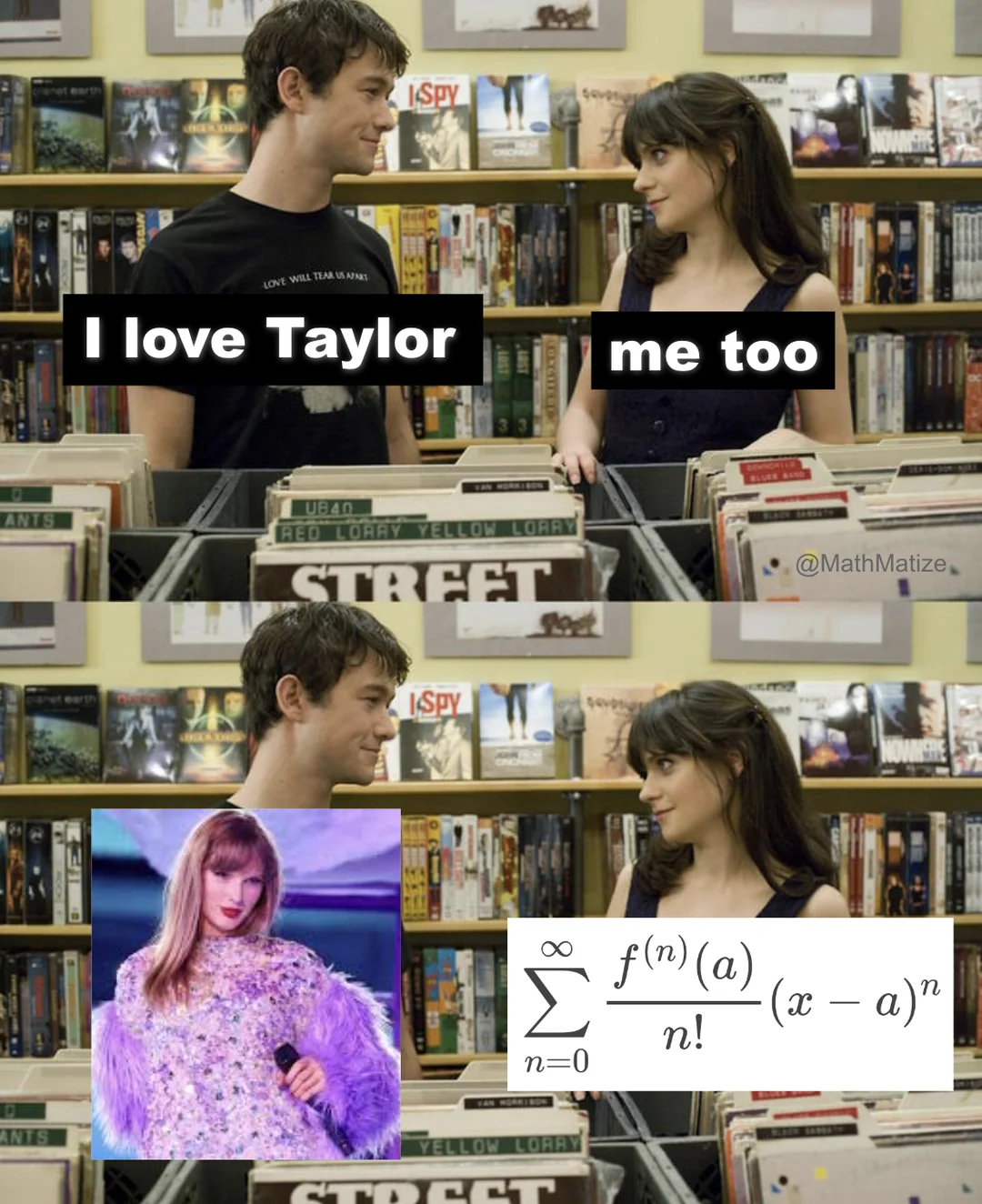
Two people in a record store bond over loving Taylor, until the reveal shows one means the pop star and the other means the Taylor series formula. It is the classic wrong-Taylor misunderstanding, and every math student has lived some version of it. Somehow they still seem happy together.
13. #KnowYourTaylor Meme: Choosing the Series Over the Singer
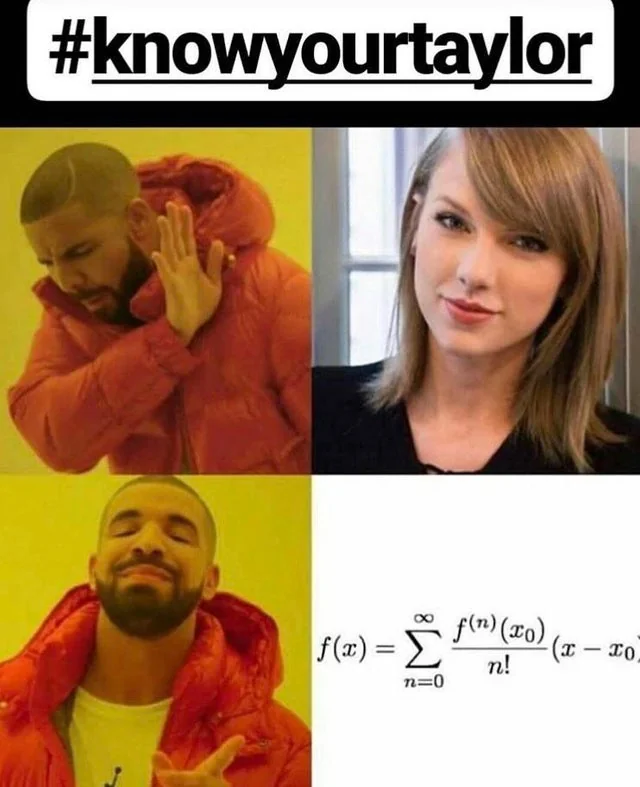
A hotline-bling-style rejection and approval: the portrait gets the raised hand, and the Taylor series formula gets the nod. Behind the pun, f(x) equals the sum of f⁽ⁿ⁾(x₀)/n! times (x − x₀)ⁿ is the most honest description of what a smooth function does near a point. #KnowYourTaylor, indeed.
14. Taylor Swift Series Meme: f(Getting Back Together) Expansion
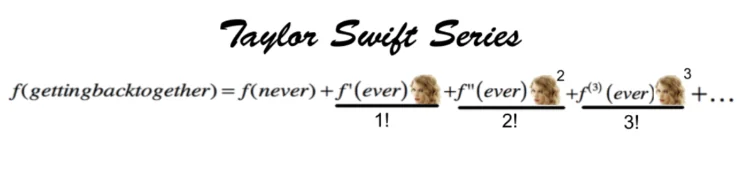
A pun series expands f(getting back together) around f(never), with each term carrying the words “ever” and “ever” raised to higher and higher powers. It is a wordplay masterpiece that borrows the exact structure of f(a) + f′(a)(x−a)/1! + f″(a)(x−a)²/2!. Anyone who has seen the real formula will spot every term.
15. “Sin Taylor” Meme: The Series of Sine With a Twist
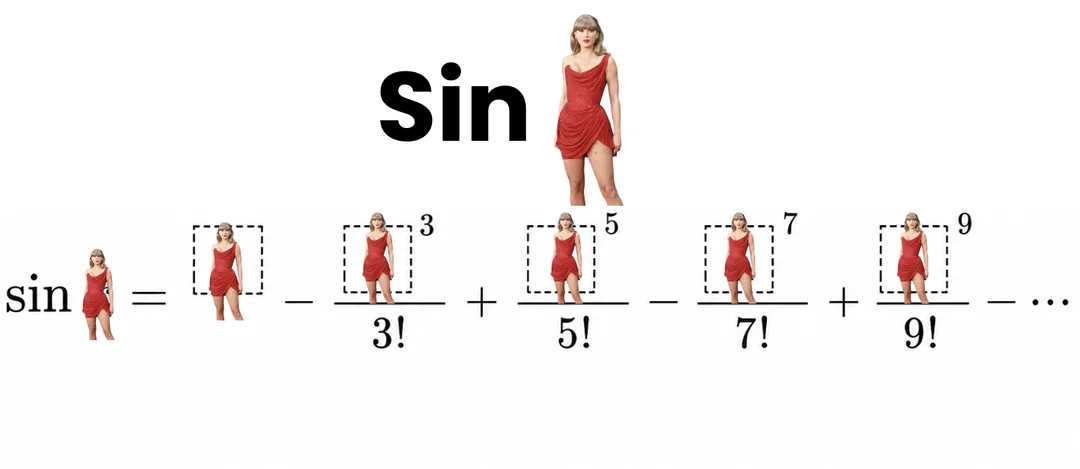
The meme takes the sine series x − x³/3! + x⁵/5! − x⁷/7! and swaps the variable x for a photo, so every term becomes a picture raised to a power. The structure is still correct, and that is the charm of the joke. It also quietly shows that you can plug anything into a power series, as long as it converges.
16. Desmos Portrait Meme: Drawing a Face With Equations
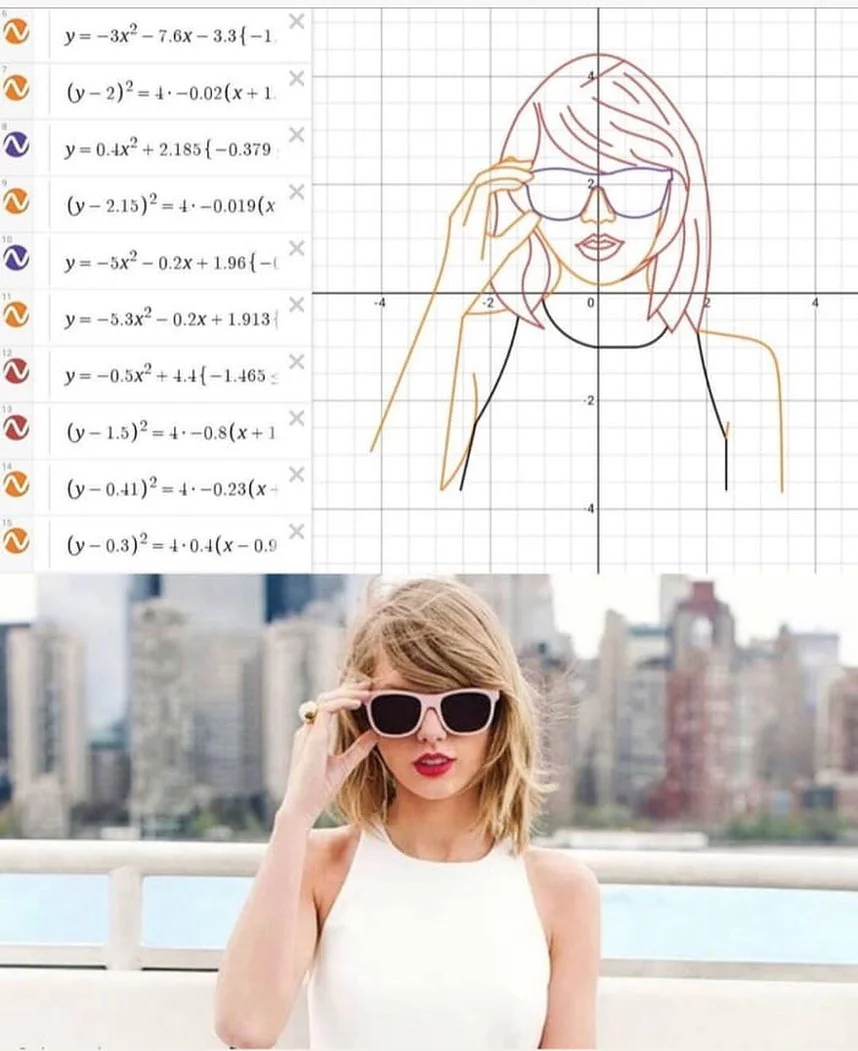
A Desmos graph turns dozens of parabola and conic equations into a line-art portrait, placed above the original photo. It is not a Taylor series, but it belongs here because it shows what happens when you take polynomials and conic sections seriously. The listed equations like y = −3x² − 7.6x − 3.3 are the real brushstrokes.
17. Taylor’s Version = Original: Why eˣ Equals Its Series
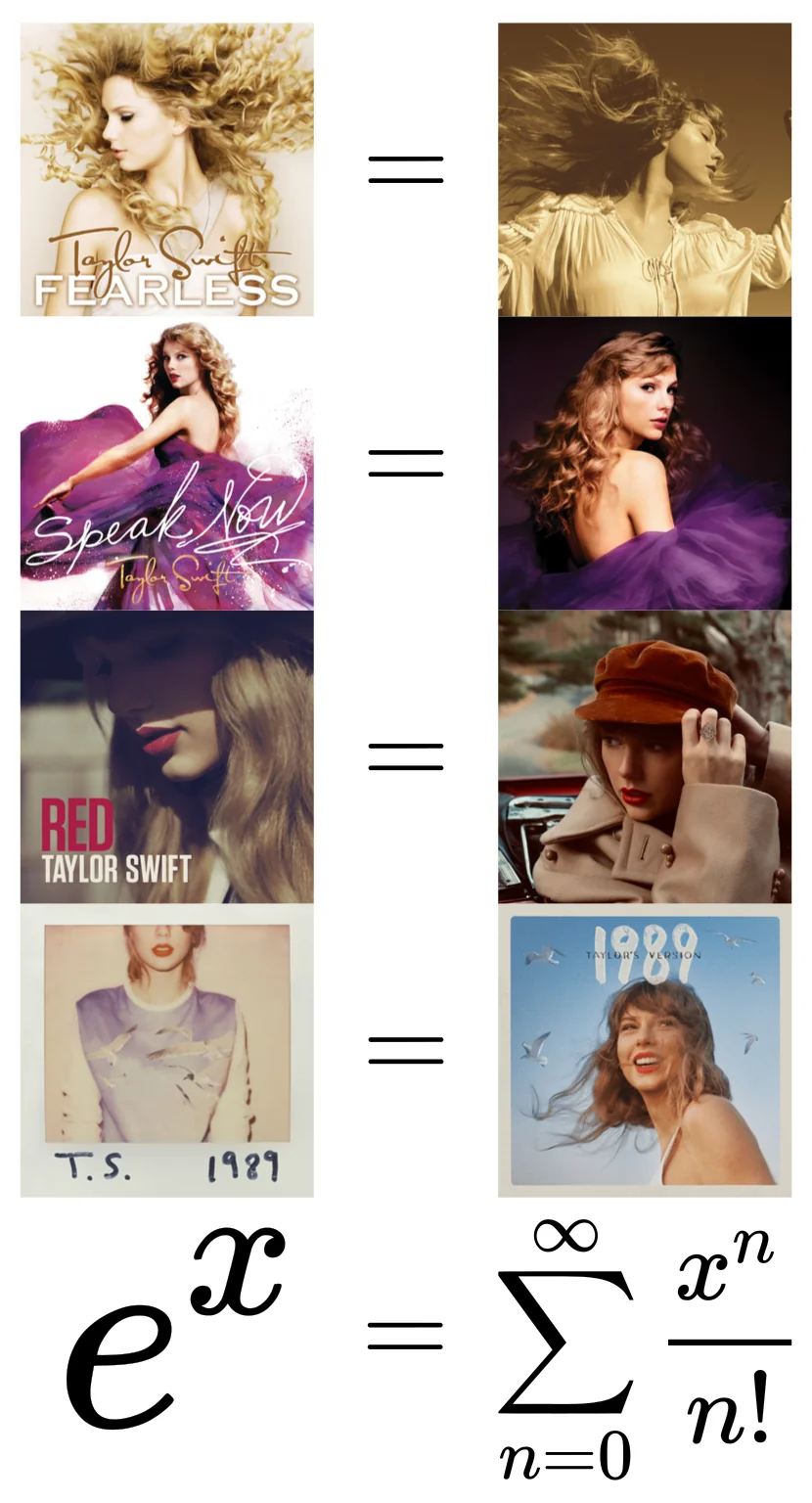
Original and re-recorded album covers are linked with equals signs, and the final row says eˣ = Σ xⁿ/n!. The punchline is mathematically exact: for eˣ the Taylor series and the function are identical for every real x. The most faithful “Taylor’s Version” in the universe.
18. “Taylor Sin X” Search Meme: The SafeSearch Surprise

A student searches for the Taylor series of sin x, types it in lazy shorthand, and the search engine slaps a strict SafeSearch warning on the results. Add a pop star’s name and a three-letter math function, and the algorithm panics. It is a good reminder to write full queries like “Taylor series of sin x” when you need homework help.
19. The Laurent Series Meme: The Taylor Series Sequel Nobody Expected
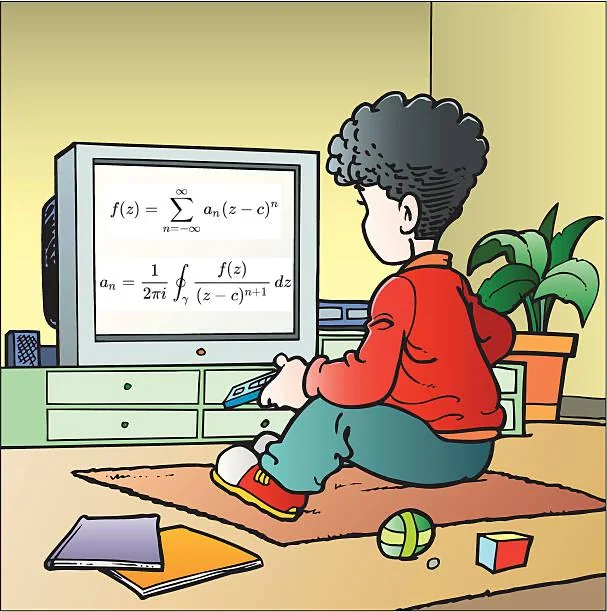
A child sits calmly in front of a TV showing the Laurent series, f(z) = Σ aₙ(z − c)ⁿ summed from negative infinity to infinity, with the contour integral formula for the coefficients. In complex analysis, this is the sequel to the Taylor series, because it allows negative powers and can describe functions near singularities. The calm child is the funniest part.
20. Taylor Swift vs Taylor Series Meme: The Ultimate Comparison
We close the countdown with a head-to-head checklist: one side does not help approximate sin(x), skip the calculus exam, ignore nonlinear equations and have no interest in convergence, while the Taylor series does all of that and more. The right column describes the series as a core topic in engineering mathematics that linearizes complex functions, depends on its convergence range and trains approximation skills. It is the cleanest summary of why students keep joking about this topic and why engineers keep using it.
What Is a Taylor Series?
A Taylor series is an infinite sum of simple power terms that represents a smooth function near a chosen point. Instead of working with a complicated function directly, you build a polynomial from its derivatives at that point. Each extra term improves the approximation, as long as you stay inside the interval where the series converges. For a thorough technical write-up, read this full mathematical definition of the Taylor series.
Here a is the center, f⁽ⁿ⁾(a) is the n-th derivative at that center, and n! is the factorial that keeps the terms shrinking fast. Written out, the series reads f(a) + f′(a)(x − a) + f″(a)(x − a)²/2! + f‴(a)(x − a)³/3! and so on. Some of the most famous results are:
sin x = x − x³/3! + x⁵/5! − x⁷/7! + …
cos x = 1 − x²/2! + x⁴/4! − x⁶/6! + …
1/(1 − x) = 1 + x + x² + x³ + … (for |x| < 1)
Every Taylor series has a radius of convergence, which is how far from the center you can go before the sum stops matching the function. That is the whole joke behind the ln(1+x) meme above.
Applications of the Taylor Series
Memes aside, Taylor series is one of the most useful tools in applied mathematics. Here is where it shows up in real work:
- Physics: the pendulum’s small-angle approximation sin θ ≈ θ, and the approximation of relativistic kinetic energy by ½mv² at low speeds.
- Engineering: linearizing nonlinear systems in control theory so that standard tools can analyze them.
- Numerical computing: math libraries and calculators evaluate sine, cosine and exponentials with polynomial approximations closely related to Taylor expansions.
- Optimization and machine learning: gradient descent uses the first-order Taylor expansion of the loss, and Newton’s method uses the second-order one.
- Differential equations: power-series solutions and finite-difference schemes both rely on Taylor expansions.
- Error analysis: the remainder term tells you exactly how wrong an approximation can be.
- Probability and statistics: expansions of moment generating functions and the delta method for approximating variance.
History of the Taylor Series
The idea is older than its name. Madhava of Sangamagrama and the Kerala school in India worked out infinite series for sine, cosine and arctangent around the 14th century. In the 17th century, James Gregory, Isaac Newton and Gottfried Leibniz developed related series as calculus took shape.
The English mathematician Brook Taylor published the general result in 1715 in his book Methodus incrementorum directa et inversa, which is why the series carries his name. You can read more in this biography of Brook Taylor. In 1742, the Scottish mathematician Colin Maclaurin used the special case centered at zero in his Treatise of Fluxions and openly credited Taylor, yet the special case still ended up with his name.
Later, Joseph-Louis Lagrange gave a precise form of the remainder term, and Augustin-Louis Cauchy showed in the early 19th century that a function can be infinitely smooth without equaling its own Taylor series. His classic counterexample is e−1/x², which has all derivatives equal to zero at the origin. That discovery pushed mathematicians toward the modern idea of analytic functions.
Taylor Series vs Maclaurin Series
The Taylor series vs Maclaurin series question confuses many students, and the memes above exploit it. The short answer: a Maclaurin series is a Taylor series with the center set to a = 0.
| Feature | Taylor series | Maclaurin series |
|---|---|---|
| Center | Any point a | Always a = 0 |
| Formula | Σ f⁽ⁿ⁾(a)/n! · (x − a)ⁿ | Σ f⁽ⁿ⁾(0)/n! · xⁿ |
| Generality | General case | Special case of Taylor |
| Best used | Approximating a function near any chosen point, such as ln x near x = 1 | Standard textbook functions like eˣ, sin x and cos x near zero |
| Named after | Brook Taylor (1715) | Colin Maclaurin (1742) |
| Meme status | Gets the glory | Gets the pool skeleton |
So every Maclaurin series is a Taylor series, but not every Taylor series is a Maclaurin series. When the function is badly behaved at zero, such as ln(x), you have to move the center and use a full Taylor series.
Taylor Series Memes: Frequently Asked Questions
Why are Taylor series memes so popular?
Taylor series memes combine a topic every STEM student struggles with and an easy pun on a famous name. That mix of shared pain and wordplay makes them highly shareable.
Is sin(x) = x really true?
Only approximately and only for small x. It is the first term of the sine series, which is why engineers use it near zero.
What is the difference between a Taylor and a Maclaurin series?
A Maclaurin series is the Taylor series centered at zero. Taylor allows any center.
What is the Laurent series?
It extends the Taylor series by allowing negative powers, which lets it describe complex functions near singular points.
Final Thoughts
These 20 Taylor series memes show that even the scariest calculus topics become friendly with a good joke. Save your favorites, send them to your study group, and keep exploring more funny math content.
Want more laughs? Try our Euler memes and our collection of programming memes 2026 read more funny maths meme .