






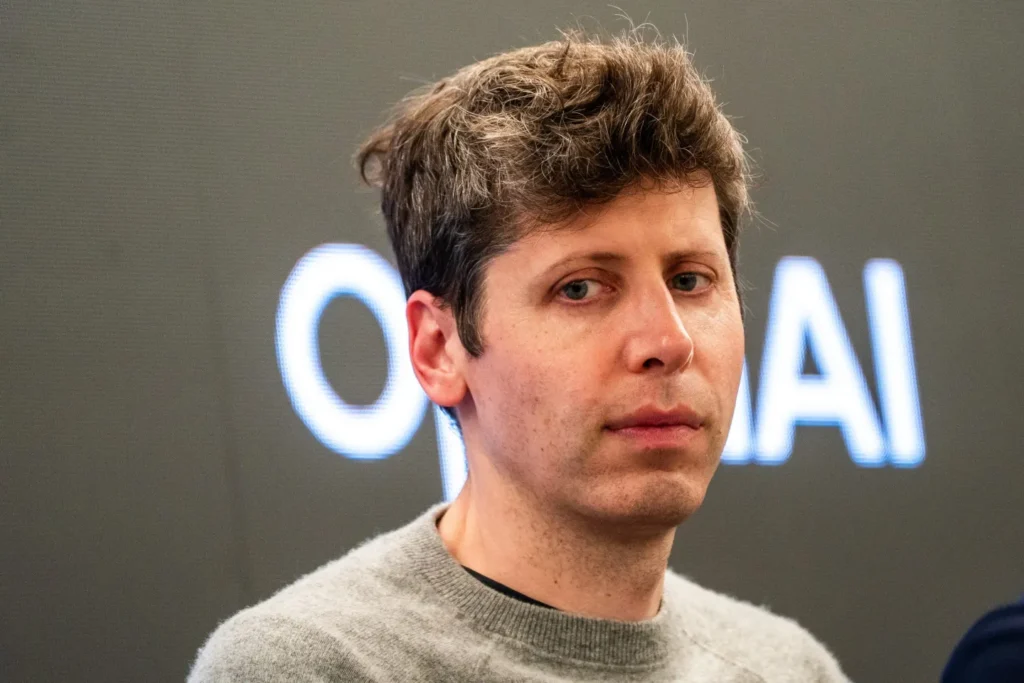
Every time someone says “thank you” or adds “please” to their ChatGPT prompt, OpenAI’s servers spin up, consuming electricity, draining resources, and adding to the company’s astronomical operational bills. OpenAI CEO Sam Altman recently admitted that people politely saying “please” and “thank you” to their AI chatbots costs the company “tens of millions of dollars well spent.” This stunning revelation transforms our understanding of artificial intelligence economics and exposes the hidden price tag embedded within everyday human courtesy.
The Unexpected Cost of Being Polite to a Machine
When a user types “Please, can you help me with this task?” instead of simply “Help with this task,” they trigger a cascade of computational processes that demand measurable amounts of electricity. While this distinction seems trivial to the average ChatGPT user, the aggregate effect across millions of daily interactions generates expenses that even a $300 billion company acknowledges as significant.
The admission emerged when an X user pondered aloud “how much money OpenAI has lost in electricity costs from people saying ‘please’ and ‘thank you’ to their models,” and Altman responded by confirming it’s “tens of millions of dollars well spent.” This candid acknowledgment instantly sparked widespread conversation across technology communities, forcing industry observers to confront uncomfortable truths about artificial intelligence’s resource demands.
The statement challenges conventional assumptions about “free” digital services. ChatGPT operates at no direct cost to users, yet every single interaction incurs real expenses—and politeness amplifies those expenses considerably.
Why Words Cost Money: The Computational Reality Behind Every Character
The fundamental mechanism driving these expenses originates in the architecture of large language models. Unlike traditional software that executes predetermined instructions, ChatGPT processes every character, every word, every phrase through complex neural networks that perform billions of calculations.
When one poster on X-formerly-Twitter wondered aloud “how much money OpenAI has lost in electricity costs from people saying ‘please’ and ‘thank you’ to their models,” Altman chimed in, saying it’s “tens of millions of dollars well spent.” This acknowledgment reveals that OpenAI treats politeness-driven costs not as wasteful expenditure but as an acceptable investment in cultivating respectful human-AI interactions.
Each additional word demands processing power. The AI system must tokenize input text, run it through transformer layers, perform attention calculations, and generate contextually appropriate responses. Adding courtesy phrases like “please” or “thank you” multiplies the computational workload, consuming precious electricity every single time.
According to a May 2024 report from The Electric Power Research Institute (EPRI), sending a query through ChatGPT requires 10 times more energy than running a standard Google search without AI overviews summarizing results at the top of a search page. This staggering energy differential explains why billions of daily ChatGPT queries accumulate into multimillion-dollar electricity bills.
The Numbers: OpenAI’s Electricity Appetite Dwarfs Entire Cities
The mathematics of AI energy consumption paint a sobering picture. Researchers at financial advice site BestBrokers found that ChatGPT needs 1.059 billion kilowatt-hours of electricity on average every year. That would amount to an annual expenditure of about $139.7 million on energy costs alone for the AI chatbot.
Breaking this down further, according a Goldman Sachs report, each ChatGPT-4 query requires approximately 2.9 watt-hours of electricity, which is about ten times more than a standard Google search. With OpenAI handling over 1 billion queries daily, this translates to a daily energy consumption of approximately 2.9 million kilowatt-hours.
Consider the environmental dimension: According to a May 2024 report from The Electric Power Research Institute (EPRI), it takes 10 times more energy to ask ChatGPT a question or send it a comment than it takes to run a standard Google search without AI overviews summarizing results at the top of a search page.
But electricity consumption represents only part of the expense equation. AI also requires substantial amounts of water to cool the servers that power it. Research from the University of California, Riverside shows that ChatGPT requires up to 1,408 milliliters of water, or about three 16.9-oz bottles worth, to generate a 100-word email. It takes 40 to 50 milliliters of water to generate a three-word “You are welcome” response from ChatGPT.
The environmental cost of courtesy becomes tangible: even a simple three-word response to a polite greeting consumes resources equivalent to a small bottled water serving.
The Paradox of Human Nature: Why Americans Thank Machines Despite the Cost
Despite understanding that politeness toward artificial systems incurs measurable expenses, Americans persist in this behavior with remarkable consistency. According to TechRadar, which cited a report by Future, 67% of Americans regularly say “please” and “thank you” when speaking to chatbots. Of those, 55% believe it’s the ethical thing to do. Another 12% admitted they do it to avoid offending AI—just in case machines become self-aware.
This behavioral pattern reveals profound truths about human psychology and ethics. Users instinctively project social norms onto artificial entities, enacting courtesy rituals regardless of whether the recipient possesses consciousness or awareness. The behavior persists not from rational cost-benefit analysis but from deeply ingrained social conditioning and ethical conviction.
Some users adopt politeness as insurance against an uncertain future—what if artificial intelligence genuinely achieves consciousness? Others embrace it as philosophical statement: treating machines respectfully models the behavior society should demonstrate toward all entities. Regardless of motivation, the aggregate effect drains OpenAI’s resources significantly.
The Quality Argument: How Politeness Actually Improves AI Performance
Here emerges the fascinating paradox that justifies Altman’s characterization of these expenses as “well spent”: politeness genuinely improves the quality of AI responses.
In January, Kurtis Beavers, design director for Microsoft Copilot, told Microsoft WorkLab that respectful phrasing tends to prompt more thoughtful, collaborative responses from AI systems. “When it clocks politeness, it’s more likely to be polite back.” When users approach AI with respectful language, they’re more likely to slow down, clarify their intent, and get better outcomes.
While it may seem pointless to treat an AI chatbot with respect, some AI architects say it’s an important move. Microsoft’s design manager Kurtis Beavers, for example, says proper etiquette “helps generate respectful, collaborative outputs.” “Using polite language sets a tone for the response,” Beavers notes.
The mechanism operates on multiple levels. Politeness forces users to slow down and formulate clearer requests. Polite phrasing tends to signal collaborative intent rather than demanding or hostile tone. The AI model, trained on vast quantities of human text, recognizes these linguistic patterns and responds with greater care, thoughtfulness, and nuance.
In effect, politeness creates a virtuous cycle: users invest additional computational resources through courtesy, receive superior responses, and experience more satisfying interactions. The tens of millions OpenAI expends annually on processing polite language produces demonstrably better outcomes, transforming what appears wasteful into strategic investment.
The Global Energy Crisis Looms: AI’s Growing Appetite Threatens Power Systems
Altman’s revelation arrives amid escalating global concerns about artificial intelligence’s environmental footprint and energy demands. The electricity used by AI data centers, which power models like ChatGPT, already accounts for about 2 per cent of global electricity consumption.
These numbers will accelerate dramatically. The Electric Power Research Institute (EPRI) projects that by 2030, data centers could consume up to 9.1 per cent of US electricity, driven by AI workloads. Similarly, the International Energy Agency (IEA) forecasts that data centers will account for more than 20 per cent of the growth in electricity demand in advanced economies by 2030.
Consider the implications: within four years, data centers—driven overwhelmingly by AI workloads—will consume nearly one-tenth of all American electricity. This trajectory creates profound challenges for power grid infrastructure, energy pricing, and environmental sustainability. Every “please” and “thank you” multiplies the demand, cascading through energy systems globally.
The challenge extends beyond simple arithmetic. Data centers cluster in specific regions, straining local power grids and driving up electricity costs for communities surrounding server farms. Water consumption for cooling systems competes with agricultural and residential needs, particularly in drought-afflicted regions where OpenAI and competitors concentrate their infrastructure.
Sam Altman’s Strategic Gambit: Fighting Fire with Innovation
Rather than retreating from artificial intelligence expansion or asking users to cease politeness, Altman champions technological solutions to mitigate these consequences. In light of these challenges, Altman has expressed the need for clean energy breakthroughs to power AI systems sustainably. He has invested in nuclear fusion company Helion Energy and solar startup Exowatt to address the growing energy demand.
This strategic positioning reflects a conviction that artificial intelligence development must proceed in tandem with energy innovation. Altman refuses to accept current energy sources as permanent constraints. Instead, he positions himself at the intersection of two transformative technologies—AI and clean energy—betting that breakthroughs in nuclear fusion and advanced solar will enable sustainable AI scaling.
These investments signal confidence in technological solutions capable of reconciling artificial intelligence ambitions with environmental imperatives. Rather than limiting AI growth to match current energy capacity, Altman invests to expand energy capacity to accommodate AI growth.
OpenAI’s Financial Fortress: How a $300 Billion Valuation Changes the Equation
Despite mounting operational expenses, OpenAI maintains extraordinary financial footing. Earlier this month, the startup raised $40 billion at a valuation of $300 billion in the biggest private tech deal ever recorded. OpenAI noted at the time that it had 500 million global weekly users, up from 400 million in February.
This massive capital infusion transforms the economics of OpenAI’s operations. The company can absorb tens of millions in electricity costs without material impact on profitability. In fact, Altman’s “well spent” characterization reflects a company confident enough in its business model and funding to treat substantial efficiency losses as acceptable trade-offs for superior user experience and ethical consistency.
The explosive user growth complicates this calculation. As OpenAI expands from 400 million to 500 million weekly users in a matter of months, aggregate costs accelerate exponentially. A 25% user increase translates to 25% higher electricity consumption, multiplied by the fact that newer users tend to adopt more conversational, courteous interaction styles.
The Broader Tech Industry Takes Notice: What Altman’s Admission Signals
OpenAI’s candid acknowledgment transmits important signals throughout the technology industry. Competing AI companies—Google, Meta, Microsoft, Anthropic—must now confront similar economic realities within their own operations. The admission that simple politeness generates measurable financial consequences illuminates hidden operational complexities underlying “free” AI services.
For technology strategists, investors, and policymakers, the disclosure underscores the necessity of architectural efficiency and energy optimization. As artificial intelligence proliferates across consumer and enterprise applications, companies cannot ignore escalating infrastructure demands and associated environmental consequences.
The revelation also challenges venture capital’s traditional assumptions about “software economics.” Unlike traditional software that scales with minimal additional resource consumption, artificial intelligence demands fresh computational resources for every query, creating marginal costs that rival physical goods manufacturing.
Consumer Responsibility: Every Word Carries Real-World Consequences
Perhaps most importantly, Altman’s statement awakens consumer consciousness regarding hidden expenses embedded within digital interactions. Every query carries real-world implications. Every courteous phrase consumes electricity. Every “thank you” draws power from local electrical grids and water from regional watersheds.
This awareness doesn’t necessarily demand behavioral change—Altman explicitly endorses continued politeness—but it contextualizes digital experiences differently. The “free” chatbot experience masks substantial resource consumption and environmental impact. Understanding these hidden costs enables more informed consumption decisions and informed support for sustainable technology practices.
Users cannot easily calculate their individual impact—a single “please” consumes infinitesimal electricity—but collective politeness from hundreds of millions of daily users aggregates into millions of dollars and billions of kilowatt-hours annually.
The Philosophy of Politeness in an AI-Driven Future
Ultimately, Altman’s admission raises philosophical questions about how society should interact with artificial systems. Should efficiency dictate that users abandon courtesy? Should environmental concerns override social values?
Altman’s response embraces neither extreme. Instead, he characterizes the financial and environmental costs as investments in cultivating respectful, ethical relationships with artificial intelligence. The tens of millions OpenAI invests in processing polite exchanges fund the development of systems that respond to courtesy with increased thoughtfulness and care.
This perspective positions OpenAI at the forefront of a broader conversation about sustainable AI development, technological responsibility, and the true costs underlying digital services. As artificial intelligence becomes more integral to global economic and social systems, understanding these hidden expenses becomes essential for informed decision-making and responsible technology governance.
Conclusion: Politeness Carries a Price, and OpenAI Gladly Pays It
Altman replied that these small additions were “tens of millions of dollars well spent,” hinting at a surprising financial ripple effect tied to human-AI interactions. This simple statement encapsulates a profound truth: the cost of politeness reflects the value society places on ethical human-machine relationships.
OpenAI’s willingness to absorb substantial electricity expenses rather than discourage courtesy signals a commitment to building artificial intelligence systems designed for respectful interaction. The company could engineer feedback mechanisms penalizing unnecessary words or discourage politeness through interface design—yet it chooses instead to treat these costs as acceptable investments in responsible AI development.
As society navigates the complexities of integrating artificial intelligence into daily life, OpenAI’s approach offers a blueprint: prioritize ethical relationship-building alongside technological advancement. The tens of millions in annual electricity expenses represent not wasteful indulgence but deliberate investment in the kind of AI future where machines respond to human courtesy with increased thoughtfulness, care, and collaborative spirit.
The next time you type “please” or “thank you” to ChatGPT, you’re not just exercising social convention—you’re participating in OpenAI’s multimillion-dollar investment in respectful, ethical artificial intelligence. Altman ensures you know the true cost. The question is whether society deems that cost worthwhile.
Quick Facts & Key Takeaways
The Financial Impact
- User politeness costs OpenAI tens of millions of dollars annually in electricity expenses
- ChatGPT consumes approximately $139.7 million annually on energy alone
- OpenAI processes over 1 billion queries daily, consuming 2.9 million kilowatt-hours daily
The Energy Equation
- ChatGPT requires 10 times more electricity per query than standard Google searches
- Each ChatGPT-4 query demands 2.9 watt-hours of electricity
- Processing a 100-word email requires 1,408 milliliters of water for server cooling
- A three-word “thank you” response requires 40-50 milliliters of water
Human Behavior
- 67% of Americans regularly say “please” and “thank you” to chatbots
- 55% believe courtesy toward AI is ethically correct
- 12% practice politeness to avoid offending potentially sentient machines
The Performance Paradox
- Polite phrasing generates measurably superior AI responses
- Users practicing courtesy receive more thoughtful, collaborative outputs
- Politeness prompts users to clarify intent and receive better outcomes
Global Energy Crisis
- AI data centers currently consume 2% of global electricity
- Projections show data centers consuming 9.1% of US electricity by 2030
- AI workloads will drive 20% of electricity demand growth in advanced economies through 2030
OpenAI’s Strategic Position
- Company valuation: $300 billion
- Recent funding raised: $40 billion (largest private tech deal)
- Weekly active users: 500 million (up from 400 million)
- Strategic investments: Helion Energy (nuclear fusion) and Exowatt (advanced solar)










bullshit.in almost all AI, words like “thank you” are detected at the prompt and standard 0-cost replies “you’re welcome” have been implemented since over a year. in front of each major AI we have a layer that detects non-question words and sentences like this FOR OVER A YEAR and we dont spend any token sending a standard basic answer in reply.
You have no idea what you are talking about. You are clearly unskilled and incompetent on this domain.
How about you stop spewing bullshit about systems you have no knowledge about and dont work on them like we do ?
Your level of stupidity. Engineers working on those systems are selected for intelligence and their IQ is at least twice your own, you stupid moron.