



France Social Media Ban Makes History Across Europe
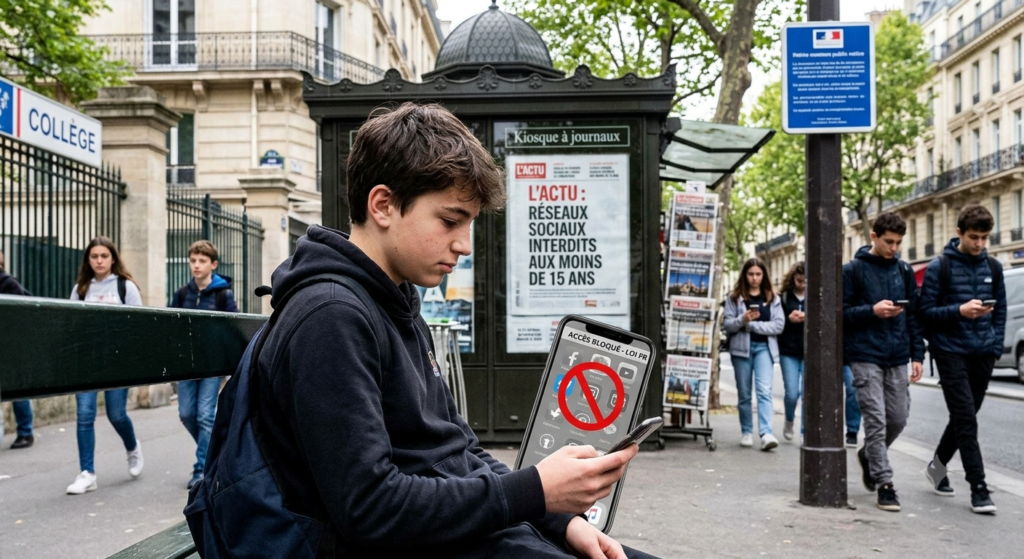
France has taken a groundbreaking step in child online safety. Lawmakers in both chambers of the French parliament voted decisively this week to approve a sweeping France social media ban that will block children under 15 from using social platforms, making the nation the first in the European Union to enact such a blanket restriction.
President Emmanuel Macron, who pushed the measure as a defining initiative of his second term, hailed the parliamentary approval as a major milestone in the fight to protect young minds from digital harm. He confirmed that social media access for under-15s would be cut off starting with the new school year, framing the law as a bold stand against unchecked platform influence over children.
How the Ban Will Roll Out
The restriction will take effect in two phases. Starting September 1, minors under 15 will be barred from creating new social media accounts. Existing accounts held by younger users will lose access starting January 2027, giving platforms time to build and test age-verification systems. Lawmakers backing the bill argued the timeline is realistic since verification technology already exists, with additional tools still being refined. Officials also promised strong safeguards to keep users’ personal data secure during the verification process.
The legislation goes beyond social platforms alone. It also introduces a nationwide ban on mobile phone use inside high schools, a rule set to take effect alongside the social media restriction at the start of the academic year.
Read more : https://yipzap.com/norway-bans-ai-for-kids-6-13-in-schools-a-bold-move-against-tech-dependency/
Why Lawmakers Pushed the Ban
The push for stricter rules follows mounting evidence of social media’s toll on adolescent mental health. Health authorities in France have reported that roughly half of teenagers spend between two and five hours daily on their smartphones, with the vast majority of children aged 12 to 17 going online every day and a majority using their devices specifically for social networking. Officials pointed to troubling links between heavy platform use and reduced self-esteem, along with rising exposure to content tied to self-harm, substance use, and suicidal behavior.
Several French families have also taken legal action against major platforms, alleging that harmful content contributed to teen suicides, adding urgency to the legislative push.
A Legal Balancing Act
Before reaching its final form, the bill required last-minute revisions after European regulators flagged overlap with the EU’s existing digital safety rules, which already govern how platforms must protect users online. Negotiators worked through a revised version just a day before the vote to ensure alignment with broader EU law, and the amended text was then sent to both chambers for final approval.
France Joins a Global Wave of Youth Protections
France’s move follows in the footsteps of Australia, which became the first country worldwide to enforce a minimum age requirement for social media use among younger teens. Britain has announced comparable restrictions expected to roll out next year, while several other European nations are actively exploring similar age limits of their own. Europe’s top digital policy officials have also signaled support for tighter controls, suggesting broader EU-wide action could follow France’s lead.
Mixed Reactions to the Law
The vote has drawn strong support from parents, child advocacy groups, and mental health experts who see it as a necessary check on addictive platform design. However, some digital rights advocates caution that an age ban alone will not fully protect young users, arguing that lasting change requires platforms to overhaul the manipulative and addictive features embedded in their design rather than relying solely on access restrictions.
What Comes Next
With parliamentary approval secured, the law now moves toward formal enactment, with Macron expected to sign it into force. Attention will next turn to how platforms implement age verification at scale, and whether other EU member states move to follow France’s example in the coming months.