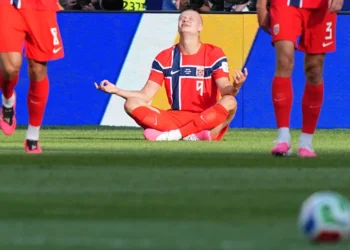





Football has never seen anything like this. Lionel Messi has officially become the first men’s player to take part in six different FIFA World Cup tournaments, extending a legacy that started two decades ago as a teenage substitute and has since grown into the most complete individual body of work in the tournament’s history.
For most of football history, five World Cups was considered the ceiling. A handful of legends managed it — Lothar Matthäus, Antonio Carbajal, Rafael Márquez, Andrés Guardado, and Manuel Neuer among them. Nobody had gone further. Messi has now broken through that barrier at age 38, doing what no outfield player or goalkeeper before him had done.
How We Got Here: Messi’s World Cup Journey
| World Cup | Year | Age | Appearances | Goals | Assists | Argentina’s Finish |
|---|---|---|---|---|---|---|
| Germany | 2006 | 18 | 3 | 1 | 1 | Quarterfinals |
| South Africa | 2010 | 22 | 5 | 0 | 1 | Quarterfinals |
| Brazil | 2014 | 26 | 7 | 4 | 1 | Runner-up |
| Russia | 2018 | 30 | 4 | 1 | 2 | Round of 16 |
| Qatar | 2022 | 35 | 7 | 7 | 3 | Champions |
| USA/Canada/Mexico | 2026 | 38 | In progress | — | — | — |
Career totals through 2022: 26 appearances, 13 goals, 8 assists.
A Slow Start, A Historic Finish
Messi’s first World Cup didn’t go the way most expected. As an 18-year-old in 2006, he barely featured, coming off the bench in just a couple of matches and watching the rest from the sidelines as Argentina exited in the quarterfinals. Four years later in South Africa, he was a regular starter but still hadn’t found his scoring touch on the world’s biggest stage, finishing the tournament without a goal.
Everything changed in Brazil in 2014. Messi carried Argentina to the final, scoring four goals along the way and picking up the tournament’s Golden Ball as its best player — a personal triumph wrapped inside a painful team defeat, as Germany won it in extra time.
Russia 2018 was a forgettable detour, a tournament where Argentina crashed out early and Messi looked, for the first time, like a player running out of chances to win the one trophy that had eluded him.
Then came Qatar.
2022: The Tournament That Changed Everything
At 35 years old, in what many assumed would be his final World Cup, Messi delivered the best individual tournament performance of his career. Seven goals, three assists, a second Golden Ball award, and — finally — the trophy itself, won on penalties against France in one of the most dramatic finals ever played. It was Argentina’s first World Cup title since 1986 and the missing piece in Messi’s own legacy.
By most reasonable standards, that would have been the ending. Instead, Messi kept playing.
Why Six Matters
Reaching a sixth World Cup isn’t just about longevity — it’s about staying at a level good enough to keep earning a place in the squad across nearly twenty years of changing teams, changing coaches, and changing eras of the sport. Players who reach five tournaments are rare. A sixth had simply never happened, for anyone, in over ninety years of World Cup history.
Messi shares this current chapter of history with long-time rival Cristiano Ronaldo, who is also playing in his sixth World Cup for Portugal in 2026 — meaning the two players who have defined the last two decades of football are, fittingly, making history again at the same time, on the same stage.
What’s Next
With Argentina entering 2026 as defending champions, the question now isn’t whether Messi belongs in the conversation about the greatest World Cup careers ever — that’s settled. The question is how he adds to it. Every appearance, goal, or assist in this tournament builds on a record that already has no real comparison in the sport.